Saving You Saved Me
Made for Love“Saving You Saved Me” is a hit song that turns Jasper’s rescue of a dolphin into a stranger’s public origin story. Its glossy, sentimental video makes the appropriation hard to mistake: the song borrows the rescue’s emotional force while replacing Jasper with Dolphin Savior (Impostor Singer). For Jasper, it becomes more than an irritating hit. First it embodies the public theft of his experience; later, its music is bound up with the private crisis that follows his dolphin-triggered change.
The Rescue Recast as a Hit
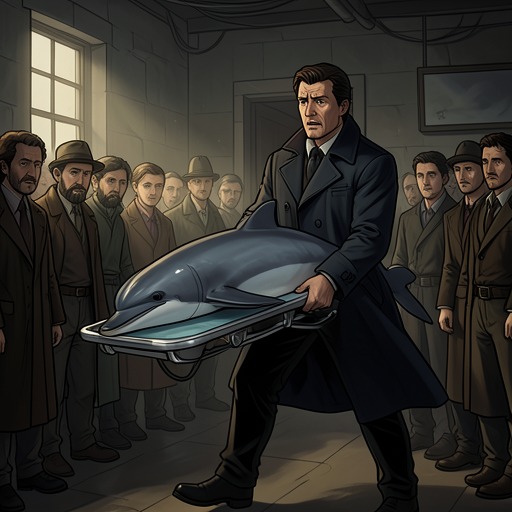
Jasper learns that a struggling musician has come forward as the man in the now-famous beach video, claiming to have rescued the dolphin himself. The impostor has written a song about the incident and is topping the charts. The arrangement is a particularly clean reversal: Jasper’s rescue supplied the story, but someone else’s claim and performance supply the fame. The song’s title promises a reciprocal salvation, though Jasper recognizes the story behind it as a con rather than an inspirational truth.
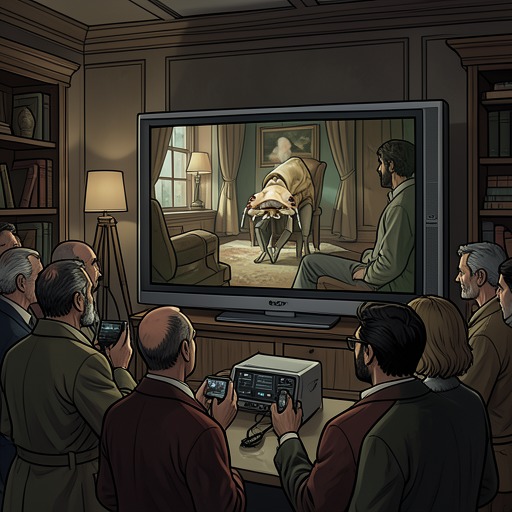
He has not yet been able to make himself listen to the song when Tiny tells him about the sensation surrounding it. Jasper tries to sound uninterested in the singer’s musical style, but his voice shakes. His reaction reflects a conflict between wanting to remain unnoticed in his interim life and being unable to ignore a stranger’s success with a story that was his. Tiny pulls up a video online, forcing the song—and the false version of Jasper’s past—into view.
The Music Video’s Spectacle
The video opens with a CGI dolphin asleep in a hospital bed, gauze across its head and IVs emerging from its left flipper. As the camera draws back, the animal is revealed in an operating theater surrounded by surgical staff. Jasper recognizes the opening music from the loudspeakers in the Oceanarium food court, where he had heard the tune without attending to its lyrics. The familiar sound has been transformed into a chart hit about dolphins, and now its video puts the stolen rescue at the center of a medical melodrama.
Dolphin Savior (Impostor Singer) enters in surgical gear that exposes his oiled chest. With a headlamp on, he approaches the bed and holds out his hand for a scalpel. Jasper’s question about the singer failing to put on gloves punctures the video’s grand presentation with practical skepticism. The surgery then turns into fantasy: the singer cuts open the dolphin, removes a glowing red-crystal heart, and holds it up to reveal an image of himself cradling the animal. At the chorus, singer and dolphin fly together through white clouds on a gigantic life preserver like a magic carpet.
The imagery converts a rescue into a staged exchange of hearts and a flight into sentimental escape. Jasper sees the gap between the video’s emotional claim and its opportunistic source; Tiny, too, calls the presentation cheeseball and contrasts it with the absent subject of environmental destruction threatening dolphins’ natural habitat. The song’s success depends on making the rescue a personal spectacle, not on attending to the animal or the conditions around it.
A Sound Bound to Jasper’s Crisis
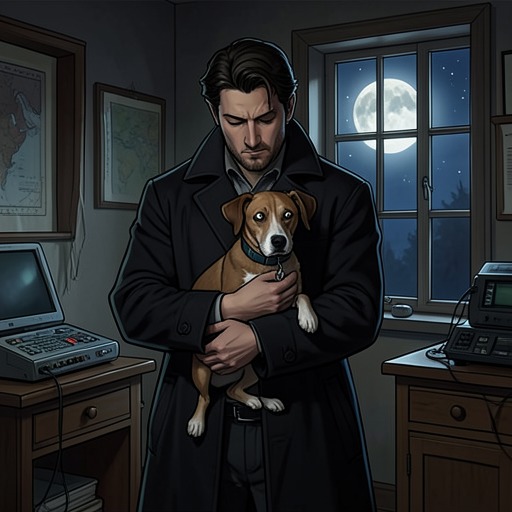
The song returns during Jasper’s suicide attempt. He fills a tub with warm water, places a razor on the nightstand, and wants to cut himself underwater, imagining the water turning red and cloudy. He connects his despair to the attack that left him a different person and to the prospect of continuing life as that person. Before acting, he retrieves a Gogol tablet he had permanently borrowed from one of the Oceanarium’s educational classrooms and plays the hit song, deliberately using it to strengthen his resolve and prevent himself from changing his mind halfway through.
An advertisement appearing beside the video—a woman in a bikini giving him a seductive wink—interrupts that resolve. Her face reminds Jasper of a former con, though he cannot settle on the name, and he treats the ad as a possible sign. He clicks it to make one last attempt to become aroused by a human woman, framing the test as a matter of life or death. The song is thus present at the threshold of an attempt that is also bound to Jasper’s struggle with the sexual change following the dolphin attack; the evidence does not make the song itself the cause of that change.
Later, while Hazel flips through radio stations in Jasper’s car, the song comes on and he brakes, twisting the dial to silence it. He apologizes and explains that the music gives him thoughts that bring on strange feelings. Hazel notices his rigid posture and that he is trying to cover his lap; she considers a stress response and chooses, provisionally, to give him the benefit of the doubt. The moment leaves her curious about him, even as she wants to keep their acquaintance at a distance. The hit song’s public life has become inseparable from a private association Jasper cannot comfortably explain: its sound does not merely recall the imposture, but carries an emotional and bodily charge into a new encounter.